
Best Creative Activities for Kids: Coloring, Drawing and Learning Through Play
Children love exploring colours, drawing pictures and creating imaginary worlds. These activities are more than entertainment; they help children express themselves, explore ideas and develop useful skills.
Creative activities can also make learning enjoyable. Coloring introduces colours and patterns, drawing encourages imagination, and hands-on games can help children explore shapes, numbers, letters and storytelling.
Parents looking for enjoyable screen-free activities can explore creative activity books for kids and use simple art projects to encourage learning at home. At Ninjas Bookland, parents can find coloring books, doodling resources and other activity-based learning materials.
Why Are Creative Activities Important for Kids?
Creative activities allow children to experiment, make choices and express their ideas. Drawing and coloring provide opportunities to practise hand control, explore visual patterns and develop imagination.
Art can also support early learning. Children can count objects in a picture, identify colours, recognise shapes or create drawings inspired by letters. Completing simple projects encourages patience and gives children opportunities to practise following instructions.
These activities provide enjoyable alternatives to screen time and can be adapted to suit different ages and interests.
12 Fun Creative Activities for Kids at Home
You do not need expensive supplies to encourage creativity. Paper, crayons, washable paints, cardboard and other everyday materials can provide plenty of inspiration.
1. Coloring Book Adventures
Give your child a coloring book and a selection of crayons or colored pencils. Let them choose a picture and experiment with different colour combinations.
Encourage them to describe the picture or invent a story about it rather than focusing on perfect colouring. Parents can explore the Coloring Books collection at Ninjas Bookland for additional ideas.
2. Draw an Imaginary Animal
Invite your child to create an animal that does not exist in the real world. They might combine butterfly wings, rabbit ears and a fish tail.
Ask them to name the animal and describe where it lives. This activity encourages imagination, drawing skills and storytelling.
3. Finger Painting
Use child-safe, washable paints and thick paper to let children create dots, lines, swirls and handprints. They can also explore what happens when two colours are mixed.
Supervise young children and choose materials suitable for their age.
4. Create a Shape Picture
Provide paper shapes such as circles, squares, triangles and rectangles. Ask your child to turn them into a picture, such as a house, garden or mountain scene.
Count the shapes together and discuss their colours. This combines creativity with early maths learning.
5. Make a Paper Collage
Use coloured paper, old magazines and child-safe glue to create a garden, ocean or city picture. Children can arrange different pieces and add drawings to complete their artwork.
This activity encourages planning, visual organisation and creative expression.
6. Doodle and Create Patterns
Encourage your child to draw repeated circles, dots, waves and triangles. They can fill a large shape with patterns or invent designs inspired by their favourite things.
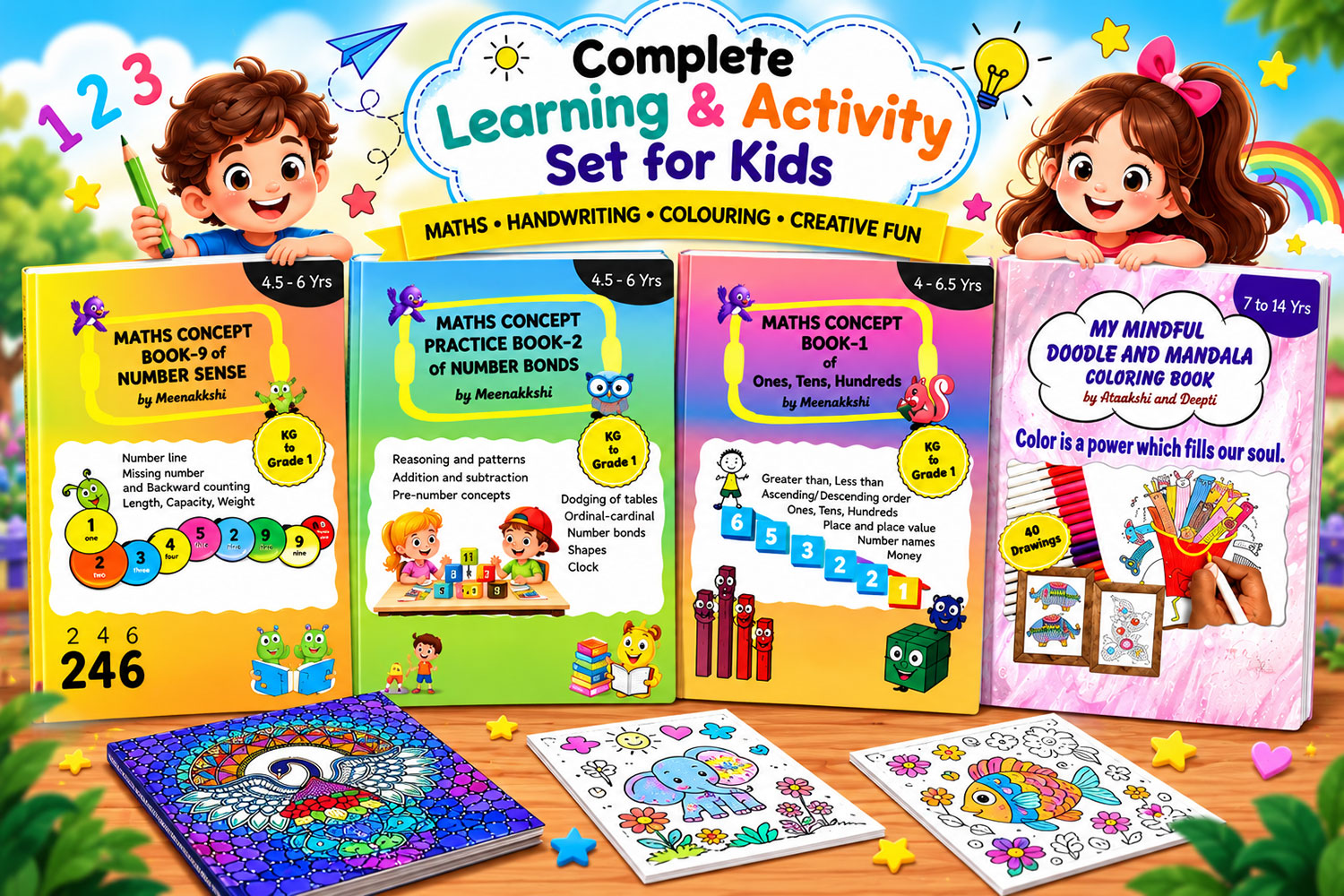
Older children may enjoy more detailed doodling and mandala colouring. Explore the My Mindful Doodle and Mandala Colouring Art Book at Ninjas Bookland, listed for children aged 7–14.
7. Nature-Inspired Art
Use fallen leaves, safe natural materials and crayons to inspire drawings. Children can observe leaf shapes, create a garden picture or arrange leaves into simple patterns.
This activity encourages observation and appreciation of nature. Avoid sharp, poisonous or contaminated materials.
8. Make a Storybook Together
Ask your child to invent a character and draw three or four pictures showing an adventure. Help them tell a story about each picture and write a short sentence if appropriate.
Younger children can dictate their stories while an adult writes. Older children can practise writing simple sentences themselves.
9. Build With Recycled Materials
Clean cardboard boxes and paper rolls can become houses, castles, toy vehicles or miniature shops.
Help your child plan the project, arrange the materials and decorate the finished creation. Adults should handle sharp tools and supervise assembly.
10. Create a Colour Hunt
Choose a colour and ask your child to find three safe objects around the home that match it. They can then draw the objects or colour pictures of them.
Repeat with other colours to practise observation, vocabulary and colour recognition.
11. Draw and Count
Combine art with maths by asking your child to draw five stars, three flowers or four fish. Count the objects together when the picture is finished.
This activity introduces number recognition and counting through creative play.
12. Design a Greeting Card
Help your child fold a sheet of paper, draw a picture and decorate a card for a birthday, festival or family celebration. They can add a name or short message with your assistance.
Greeting cards encourage creativity, early writing and thoughtful communication.
How to Combine Creativity With Learning
Creative activities can support learning without making play feel like a formal lesson.
During coloring, discuss colours and shapes. When drawing, ask children to include a particular number of objects. Letter-based pictures can introduce alphabet recognition, while storytelling encourages vocabulary and communication.
You can also introduce patterns through doodling. For example, draw a circle, square, circle and square, then ask your child to continue the sequence.
The key is to make learning part of the activity rather than interrupting children with too many questions or instructions.
How to Choose the Best Creative Activity Books for Kids
A suitable activity book provides inspiration while allowing children to explore their own ideas. Choose books that match your child's age, interests and abilities.
Younger children may prefer simple pictures and larger shapes, while older children may enjoy detailed illustrations, doodling and mandala designs. Books that combine guided coloring with open-ended drawing can offer variety.
Check the product description for age recommendations, page count and activity styles. Choose a comfortable difficulty level so children can enjoy the process without becoming frustrated.
Recommended Creative Activity Books at Ninjas Bookland
Parents searching for creative activity books for kids can explore the Coloring Books category at Ninjas Bookland.
One listed option is the My Mindful Doodle and Mandala Colouring Art Book, which includes 32 themed doodle drawings and eight mandala sheets across 48 pages. It is listed for ages 7–14 and may suit children who enjoy detailed patterns and creative colouring.
Parents can also browse the Doodling Journal collection for additional creative resources.
Before purchasing, review the current product description and age recommendations to find a suitable option for your child.
A Simple 7-Day Creative Activity Plan
| Day | Activity | Learning Opportunity |
|---|---|---|
| Monday | Coloring book session | Colours and patterns |
| Tuesday | Draw an imaginary animal | Imagination and storytelling |
| Wednesday | Create a shape picture | Shapes and counting |
| Thursday | Make a paper collage | Creative arrangement |
| Friday | Doodle patterns | Concentration and expression |
| Saturday | Nature-inspired art | Observation |
| Sunday | Design a greeting card | Art and communication |
This is a flexible plan, not a strict timetable. Let children repeat favourite activities or choose something new depending on their interests.
Common Mistakes to Avoid During Creative Activities
Avoid expecting every picture to look perfect or correcting every colour choice. Children benefit from having the freedom to experiment and make their own decisions.
Choose age-appropriate activities and provide guidance without taking over the project. Avoid comparing children's artwork, and focus on the ideas and effort behind their creations rather than only the finished result.
Always supervise activities involving scissors, glue, paints and small craft materials.
